Introduction
The stadiums of the future will be powered by intelligent digital assistants that help visitors navigate venues, access information, enhance safety, and improve the overall event experience. Combining robotics, Artificial Intelligence (AI), computer vision, and smart infrastructure, these assistants will play an increasingly important role in major sporting and entertainment events.
This year, the 2026 PARC Engineers League invites participants to design, test and deploy autonomous solutions on the CAYTU Sito-É Robot, an autonomous service robot provided by the organizers. Acting as a digital stadium assistant, the robot will interact with visitors, understand natural language requests, perceive its surroundings, and access information from connected stadium systems to deliver useful services in a dynamic event environment to enhance the stadium experience.
The competition consists of two phases: the Simulation Phase and the Real World Phase.
Simulation Phase
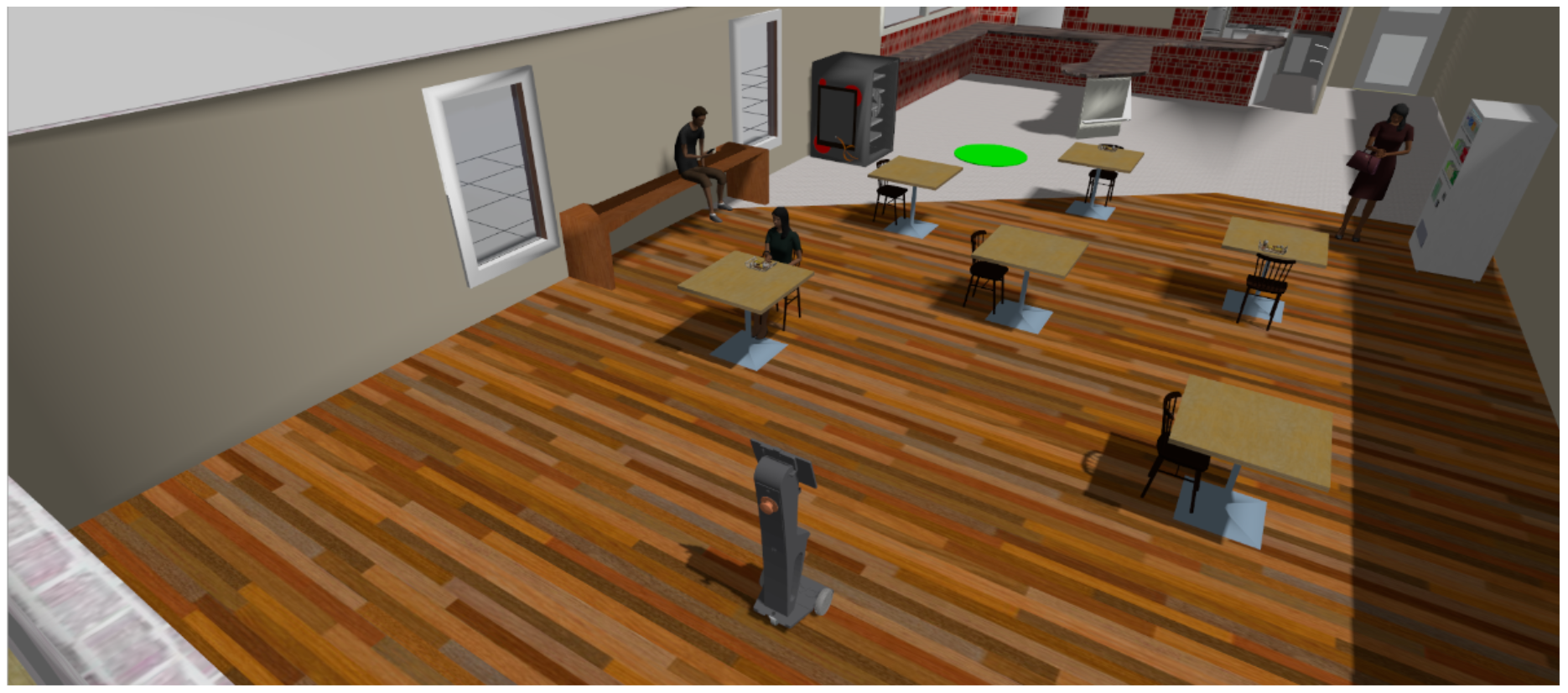
For this phase of the competition, teams will work with the CAYTU Sito-É in simulation (using the Gazebo Harmonic Robot Simulator) and use state-of-the-art tools (e.g. ROS2, Nav2, etc.) to build a software solution to autonomously navigate the robot in a restaurant within a smart stadium.
Detailed instructions for the respective challenges are made available in this documentation. Teams are required to complete and upload their solutions on or before the Phase 1 deadline. Following team evaluations, best performing teams will qualify to compete in Phase 2: Real World Phase.
Real World Phase
This phase will take place in-person in Senegal in November 2026.
The top 10 teams will compete by integrating their innovative solutions on the physical CAYTU Sito-É.
Certificates & Awards
All participants who qualify to the real world phase will receive a certificate of participation.
The winner of the competition will be given a cash reward of $1000.